How Artificial Intelligence (AI) is Redefining Learning for Children?


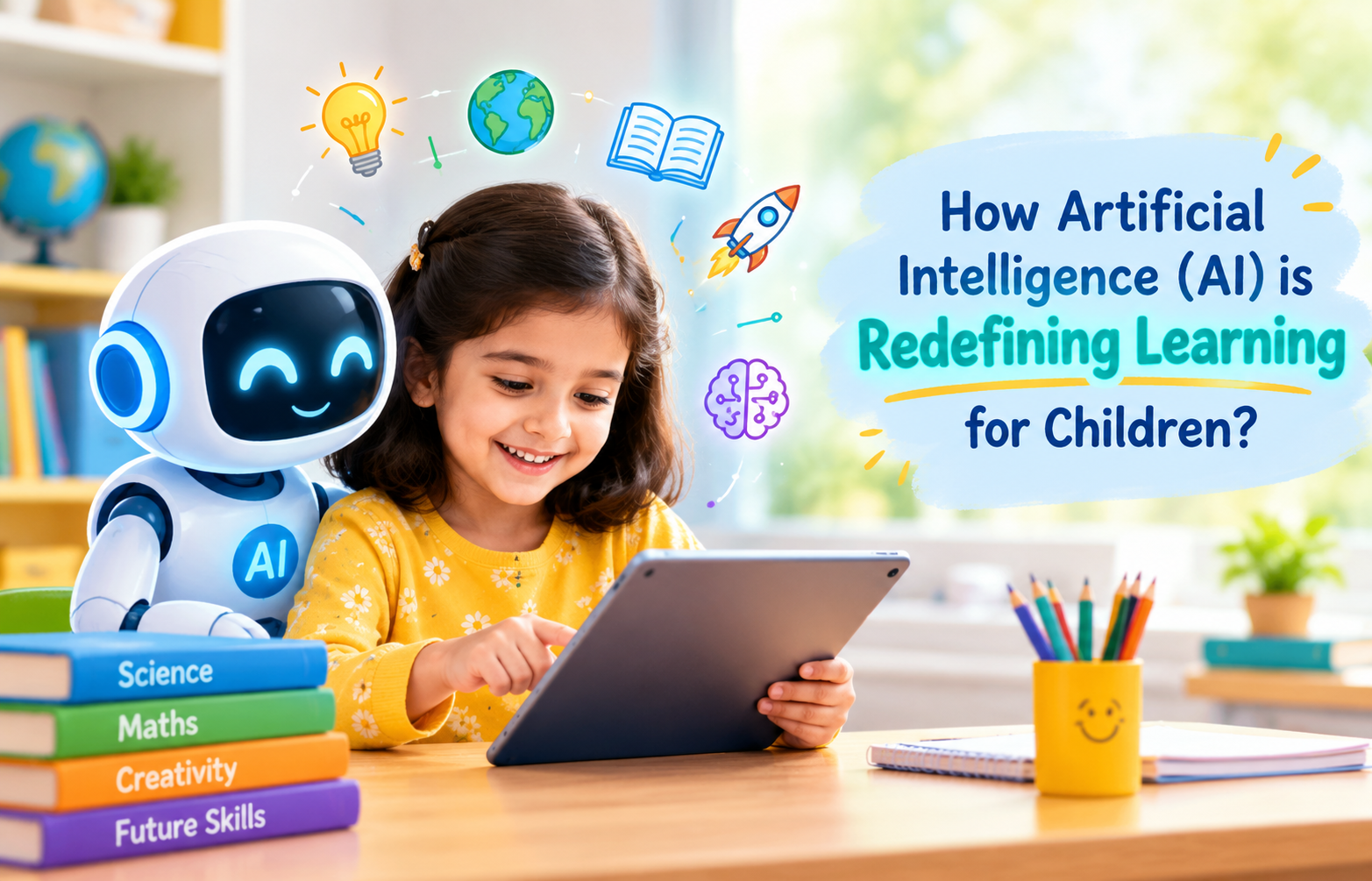
A generation ago, a child encountering a math problem had three options: ask a parent, ask a teacher the next day or simply give up, but not anymore! Today, a child can ask anything to an AI tutor, even at the wee hours of the day and can get a step-by-step explanation in seconds. Although this shift sounds small, but it is quietly reshaping how and what children learn.
Artificial intelligence (AI) is no longer a futuristic idea reserved for research laboratories, instead it is in the mobile or laptop applications that children use for homework, the reading platforms their schools adopt and the voice assistants in their living rooms. In this blog post, we will throw some light on how AI is changing the learning dynamics for children, what are its real benefits and associated risks and how parents and teachers can guide children through it.
Let’s get started!
Here are some of the most common yet essential ways through which AI is reshaping children’s learning criteria:
A teacher with 30-40 students in a classroom pitch a lesson at a middle level, which means some children are bored while others are lost. However, AI-powered learning tools are changing this by adapting to each child individually. Moreover, adaptive learning platforms track how a child answers questions, how long they take, and where they make mistakes. If a student struggles with fractions, the system offers more practical and simpler explanations. If they master a topic quickly, it moves them ahead. This allows every child to learn at their own pace and explore their strengths and weaknesses without feeling out of the box.
One-on-one tutoring has long been one of the most effective teaching methods, but it has also been expensive and out of reach for many families. But with the advent of AI tutors and chat-based assistants, it is becoming accessible again. A child can ask "why is the sky blue?” or "can you explain photosynthesis differently?" as many times as they want, that too at any hour of the day without feeling ashamed. Additionally, for families where parents cannot help with homework, whether because of time, language or subject difficulty, an AI tutor can provide support very efficiently.
Children learn the best when they are curious, interested and having fun. AI offers engaging learning by interactive storytelling, quick quizzes, turning complex topics into fun answers and offering voice assistants for children who struggle to write. Explore Thinktrail, (backed by Reliance Jio) an engaging learning book launched for 1st to 8th class students that helps them explore every topic virtually and make learning easy and interesting.
Also, don’t forget to try Mittsure Lens, (powered by Embibe) a picture search technology that allows students to scan any text using their smartphone and understand every minute detail with high-definition 3D -labelled models and immersive 3D videos.
A common fear is that AI will replace teachers. In practice, the more likely outcome is that it changes what teachers spend their time on and how they integrate AI into their everyday practices. AI can handle simple routine tasks such as marking quizzes, creating practice questions and flagging which students are falling behind. This helps with time saving and allows teachers to do what AI cannot: mentoring, encouraging, resolving conflicts and noticing when a child is having a bad day. Moreover, data from AI tools can also help teachers spot learning gaps early before they become serious problems.
Mentioned below are a few important tips that parents and teachers should keep in mind to prevent risks associated with AI:
1. Make sure your child is not solely dependent on AI tools as it prevents them from generating their own ideas.
2. Always verify the AI content for accuracy as the information may not always be correct.
3. Teach your child to give AI the right prompts for clear and concise results.
4. Try the tools with your child as it maintains transparency and teach how and what to find, to both of you.
5. Encourage your child to think first and then use AI tools for better understanding.
6. Set healthy limits and balance screen-based learning with reading physical books, outdoor play, and conversation.
7. Don’t forget to review privacy settings and always choose age-appropriate tools from reputable providers to prevent personal data collection.
AI is neither a magic fix for education, nor it is a threat to be feared of. Instead, it is a powerful tool that can make learning more personal, accessible and joyful, when used thoughtfully. On the contrary, when used carelessly, it can create shortcuts and dependence. Therefore, the ultimate goal is not to raise children who can simply use AI, but the ones who remain curious, vigilant and capable of thinking independently. Make sure to guide children to question, create and connect, so that AI can become what the best educational technology has always aspired to be: a way of helping every child discover their strengths and weaknesses and make learning more engaging. Always remember, the best classrooms of the future are likely to be human-led and AI-supported, not the other way around.


