Akhil Bharatiya Shiksha Samagam: How is Education Evolving for the Future?


Education is evolving and so is the Indian School Education System. In recent years, one of the most significant developments is the Central Board of Secondary Education’s move to conduct board examinations twice a year starting from 2026. And this is not just accommodating two examinations in a calendar year, it is going to change the overall purpose of why assessments are conducted in the first place. From what it was as a single high-stakes outcome to an ongoing process that supports learning, growth, and improvement.
The proposed structure allows students appearing for Class 10 and Class 12 board examinations to attempt the exam twice within the same academic year. Importantly, this does not mean that students are required to sit for both attempts. The second examination serves as an opportunity for improvement, and the better of the two scores will be considered for final certification.
Both examinations will be based on the same prescribed syllabus, ensuring academic consistency while offering flexibility. The intention is not to repeat the whole process but give opportunities to students so that they get a better chance to rectify their errors and if by any chance they could not perform well in the first exam they can do it in the second one.
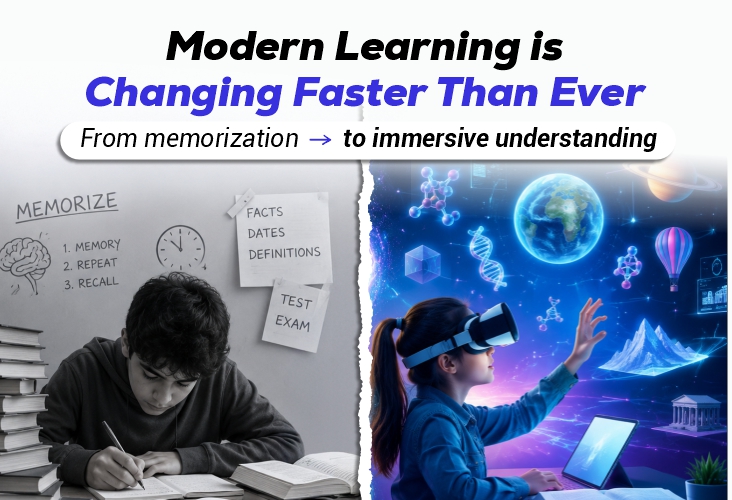
For decades, CBSE board exams have held a lot of pressure, where students end up memorising instead of actually grabbing the concept. Performance is mostly seen under stress. Two exam opportunities reduce the emotional and academic burden that is placed on students.
Moving to twice-a-year board examinations demonstrates an increasing realization that the journey of a student's learning is too vast to be represented by a single examination. Board exams for decades, in itself, have put a lot of pressure on performance and reduction of learning to mere memorization. This is an informed step to actually bring down the emotional and academic burdens on students.
Equally important, it aligns with the broader vision of the National Education Policy, focused on competency-based learning, flexibility in assessment, and student-centric education. With multiple opportunities to perform, CBSE attempts to provide benefits toward mastery over marks and understanding over recall.
For schools, this reform necessitates a rethinking of academic calendars and instructional pacing. Teaching schedules can no longer be designed solely around a single end-of-year examination. Instead, schools will need to distribute learning, assessment, and revision more evenly across the academic year.
Such a change in assessment would promote more thoughtful patterns of curriculum planning in which learning outcomes are emphasised over the completion of the syllabus. Schools that already have systems of careful planning and evaluation in place would find the change easier to cope with; in other cases, the establishment of such systems would have to be a gradual one.
With the introduction of two board exam windows, internal exams are more important. Internal exams are also crucial in filling the gaps while providing a path forward with access to decision-making strategies on improvement attempts. Internal exams are not merely preparatory exams but rather tools that are diagnostic in nature.
Tests have to be devised so not just knowledge is being assessed, but real knowledge. Schools will have to consider the issues of fairness and consistencies between internal tests and the expectations at the Board level.

A new change that teachers are at the centre of is the decreased focus on a high-stakes exam. A decrease in the reliance on a high-stakes test enables educators to concentrate even deeper on ensuring conceptual clarity and application-based learning. Instructing can become more personalized, with responsiveness replacing the need to race against time.
At the same time, there are other roles that teachers have, apart from imparting knowledge to the students. We look at ways in which teachers are helped to encourage children to learn from their own reflections, improvements, remedial activities, etc. A good teacher should have a good level of assessment literacy, i.e., they should be able to interpret the data obtained from children as well as provide good feedback to the children.
In a system where improvement attempts can be made, remedial instruction is not simply voluntary and auxiliary. It is primary and essential if and when students will be successful academically. Teachers need to look for patterns among student mistakes and address student misconceptions.
It's not about repeating the learning, it's about remediating the learning with insight, and the institutions who invest time and energy into tools and frameworks to support this will reap the benefits not just for the examination results, but for the learning itself.
The effect that this reform has on the well-being of students is dependent on its administration. By viewing a change as a chance for development, an individual can minimize anxieties they are feeling whilst also building confidence.
The narrative in which both schools and teachers have a defining role to play needs to ensure that, in stressing learning, efforts, and improvement, the purpose for which the reform was intended is achieved.

Stronger foundational learning, such as in the primary grades, becomes imperative to prepare the student to best respond to flexible assessment. Equally vital is investing more in teachers, such as training teachers on how to design the assessment, the use of feedback, and differentiation.
There will also be a need for strong student tracking mechanisms that can help in understanding the trends or patterns of student development, and intervention strategies can be planned accordingly. Structured academic support systems will become indispensable here.
A school that approaches change like this will not only respond to the requirements, it will create a stronger, more confident learner as a result too. The future of assessment is flexible, formative, and learner-focused and the journey toward it begins now.
Yes, CBSE will conduct board examinations twice a year for class 10 in 2026 as per the NEP 2020 guidelines.
According to the National Education Policy (NEP), CBSE board exam will be conducted twice a year from the academic year 2026-27.
Yes, CBSE is imposing major changes in board exam 2026, focusing on competency based learning to reduce rote memorization.
Yes, 27 out of 80 passed in CBSE board exam 2026.