Akhil Bharatiya Shiksha Samagam: How is Education Evolving for the Future?


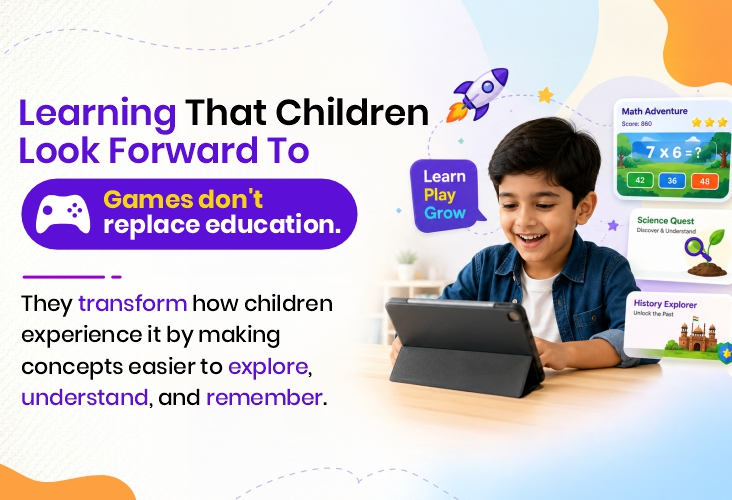
The Level Up Learning national survey found that game-based learning has become a mainstream instructional approach in K-8 education. Games are no longer treated as occasional enrichment that is provided to children but is now integrated as a core component where teachers can monitor student’s learning with an ongoing evaluation that does not affect the final grades. And teachers report the strongest gains in mathematics and literacy.
The UN Convention on the Rights of the Child (UNCRC) recognizes play as a fundamental right under Article 31. Where it says that play is not optional but is a non-negotiable entitlement which is critical for the holistic development of the child, emotional well-being, and acquiring the essential life skills.
Somewhere game based learning has a moderate to large effect on cognitive, social, emotional, motivation, and engagement outcomes in Early Childhood.
TalentLMS's Gamification at Work survey established a stark motivational divide between gamified and non-gamified learning environments. The gap is not marginal: gamified training produces motivated learners at a rate 36% higher than traditional formats, while non-gamified training generates boredom and disengagement at a rate that undermines the entire training investment.
Even the National Education Policy (NEP) 2020 and the National Curriculum Framework (NCF) 2023, both lay emphasis on schools to move towards being play-based, activity-based, and experiential learning, especially to strengthen the foundational and preparatory years.
Somewhere it is becoming clear that learning is no longer expected to happen only through textbooks, it can even happen through experiences.
So it is important that we implicate game-based learning in the classrooms so that children learn things easier and better. This blog is a detailed guide on what game-based learning is and how it helps children in learning better.
Game-Based Learning is in itself a self explanatory word where it means that learning that is based on games.
It can be considered as an educational approach where games are used as resources that enhance the learning of a student while grabbing more of their attention, keeping them more engaged during new teaching learning models.
It can be the traditional type like board games or card games and can also be the digital type like video games.
In traditional learning, students study by simply receiving the information but in game-based learning, children participate actively in the learning.
Because they get to make decisions, solve the challenges by themselves, follow the rules, work with team mates, think strategically, and keep learning while playing.
The objective of game-based learning is not to just make learning fun but to make it meaningful too so that children learn better and be wiser.
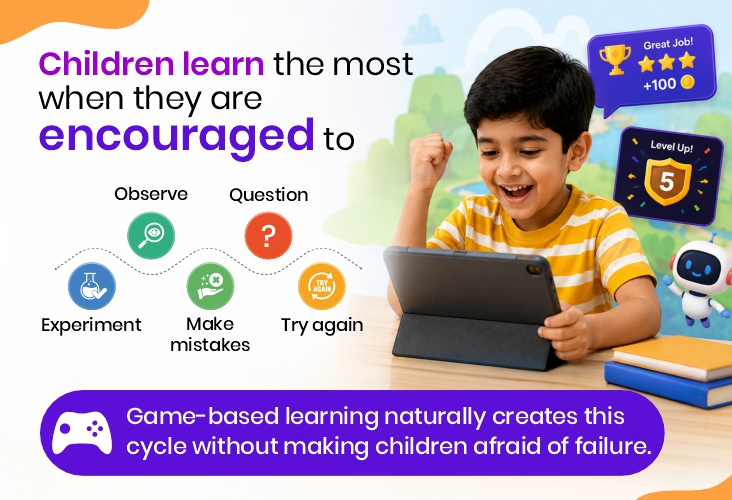
There is a big difference and impact of the Modern Education System, where children observing or listening to learning and children participating in the activities to learn.
Whether they stack cups, build structures, throw rings, complete obstacles in a game, or participate in educational challenges, these activities keep them mentally engaged.
So when children actively participate it improves their attention, retention, and understanding.
When children go through game-based learning, the tasks involved in completing the game are not direct.
So they have to analyse the situations, make the decisions, test the different solutions, learn from the mistakes and keep trying before they finally solve the game.
This eventually develops logical thinking and the ability to be happy and successful.
The expected baseline attention span for a child is roughly 2 to 3 minutes per year of their age.
And it is genuinely a big concern considering the screen times and the diverse products that keep taking attention away.
When children learn through games, it naturally increases engagement because children get engrossed in solving the game, they receive immediate feedback, understand the clear goals, and seek progress which is visible.
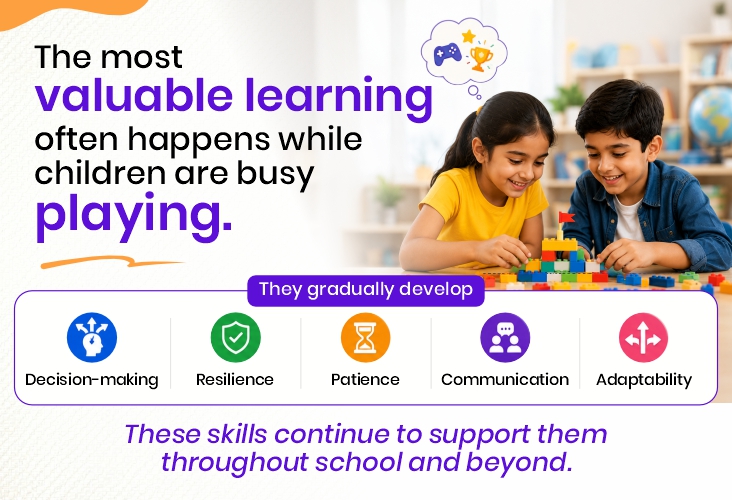
Many educational games involve tasks that require children to work in a team, communicate with people around, negotiate their work requirements, keep patience while playing, and know how to take turns while giving chances to others too.
Games provide a practical and safe environment where children can play while making mistakes too.
So it is a great trial and error way for them to learn and grow.
The Modern Educational Methods of teaching, make them understand that mistakes are a part of improvement which ultimately helps in boosting their confidence and independent thinking, especially when they face failures in life.
A meta-analysis of independent, peer-reviewed studies found that classroom use of game-based learning improves student performance on tests by a full letter grade on average.
So educational board games are designed in a way that blends games and interactive activities with academic syllabus and sharpens the development of the brain’s core mental processes.
Educational Board Games strengthen the process in children to analyse information, evaluate the arguments, and apply the rigorous principles so that they come to a valid answer.
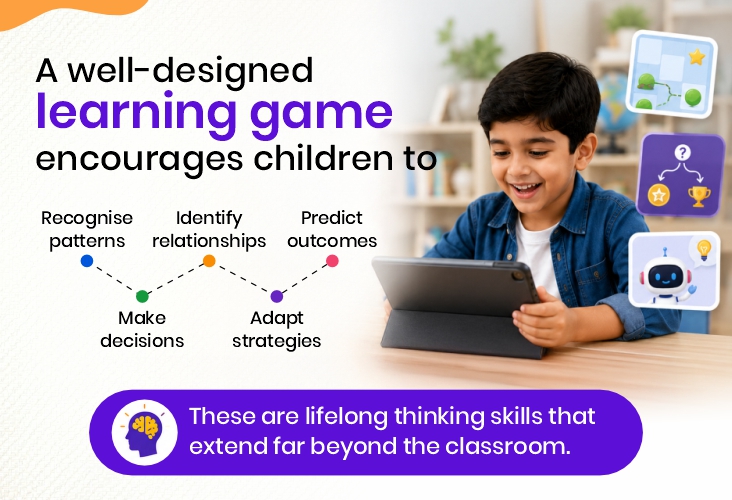
It helps in planning the moves, observing things around, and thinking strategically.
Students in active learning environments score 54% higher on tests compared to students in traditional passive lecture formats, this data from Engageli's active learning impact study demonstrates the performance gap between passive and active learning environments.
There are fun indoor and outdoor games like ring toss, bowling sets, hopscotch, table tennis, etc, which helps children make their physical movement while also helping them concentrate, coordinate, count, and even make better decision-making.
With these games children remain physically active while also developing important cognitive skills.
STEAM-based activities introduce Science, Technology, Engineering, Arts, and Mathematics where children have to build the game structure all by themselves.
So instead of simply learning the concepts from textbooks, stem toys make them busy, children sit to build the game from scratch, experiment with the process, observe where they might be going wrong, and eventually discover the right way to solve the game.
The term Montessori is developed by Dr. Maria Montessori who built a child centered educational approach that helps kids understand their own learning needs, set the specific goals accordingly, identify what resources are going to be helpful, implement the strategies to make things work better and accordingly sit to evaluate their own outcomes.
It also requires kids to actively engage with the physical objects around them, see through the environments around them, and experiment with them.
So through montessori toys like sorting, stacking, matching, threading, and all practical life-activities, children learn at their own pace, which sharpens their movement coordination of small muscles like hands, fingers, wrists, and feet.
A 2024 survey by The Harris Poll for Discovery Education found that engagement challenges have intensified in the post-pandemic period.
Students in grades 5-12 are participating in class activities at higher rates, but fewer than half say they enjoy their classes, and one in three reports being 'always' bored.
So game-based learning is not just about making learning fun and engaging but shaping it in a way that children understand the core of the knowledge, can retain it for a longer period of time, and accordingly, use it for the bigger purpose of their life too.
And for all kinds of gamebased learning, visit www.mittstore.com.
Learning that follows an educational approach but has games and fun activities to teach the specific skills, concepts, and knowledge.
John Amos Comenius is a 17th-century Czech philosopher who revolutionized early education by introducing play as a core pedagogical tool and is considered a historical pioneer of game-based learning. James Paul Gee is widely recognized as the "godfather" of modern video game-based learning.
The origins trace back to Ancient Greece, where philosophers like Plato and Aristotle proposed that play was essential for developing practical skills and acquiring knowledge.
The major components of game-based learning are
Game-based learning helps in increasing engagement, providing a safe environment for failure, retaining better information, enhancing problem solving, improving collaboration, etc.