Akhil Bharatiya Shiksha Samagam: How is Education Evolving for the Future?


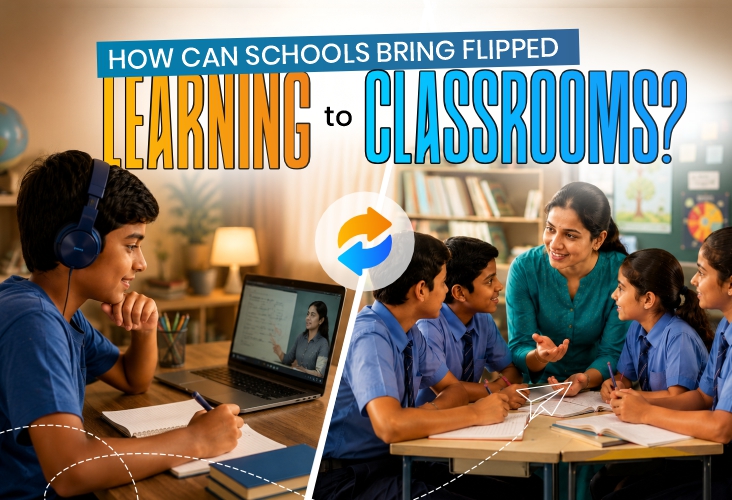
A learning that was started by the high school chemistry teachers has made more than 75% of students find it engaging, improved the academic performance of more than 68% of students, and even teachers found classroom interaction getting better, just that their workload increased.
What we are talking of is Flipped Learning that many Indian institutions have successfully adopted.
The Indian School of Business has introduced Flipped Classrooms to teach the post graduate students. There’s another B-school that introduced Flipped Learning to their MBA course.
As per a study conducted in Tezpur University, flipped classrooms greatly enhanced the academic performance and critical thinking abilities of B.Ed. students.
Another study by JSPM's Imperial College of Engineering in Pune showed that flipped classrooms showed overall academic performance and higher-order thinking abilities in engineering courses.
These results show that flipped learning has been bringing enormous changes in the education sector and becoming one of the must haves in the Indian classrooms. Let’s look into how schools can introduce flipped learning into classrooms early.
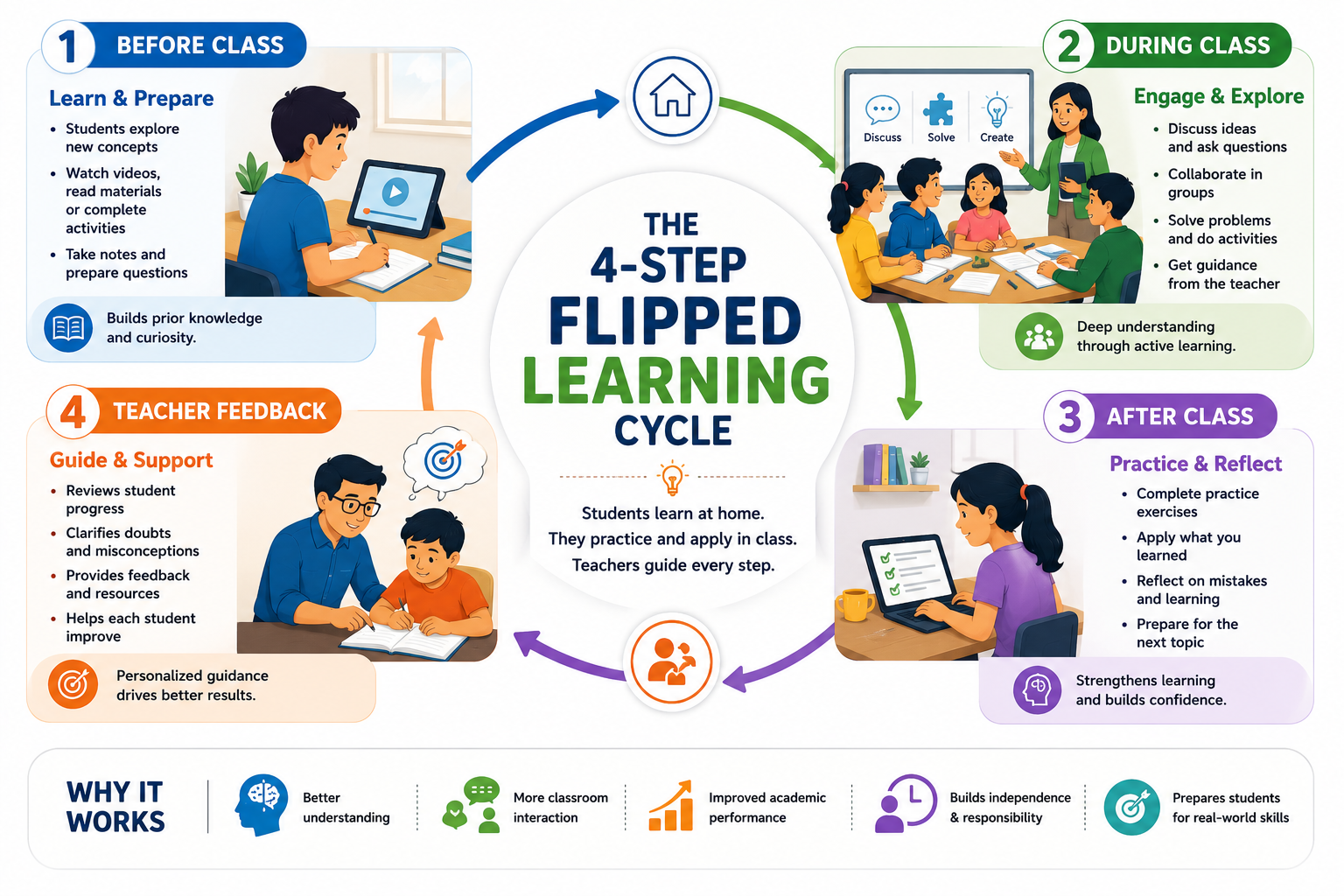
Flipped classrooms are ones where the educators flip the model from giving homework after the classwork is done to students doing homework and then discuss their share of learning as classwork.
In simple words, homework happens first and eventually the lesson continues in the class. It combines online mode and also the in person instructions in a way that a flexible, student centered learning is created so that students are able to build knowledge, critique, and application, constructively.
Students first understand the concepts by themselves either by studying individually or in a group and then discuss in the class by communicating effectively, analysing the concepts, and reasoning with their logic.
It is mostly used for subjects like information systems, engineering, education, marketing, etc, and can be considered as one of the most effective methods of utilizing technology in education.
In this pedagogical method classes are conducted through digital classrooms while the emergence of interactive videos, whiteboards, and video conferencing resources have made it easy to implement flipped learning into classrooms.
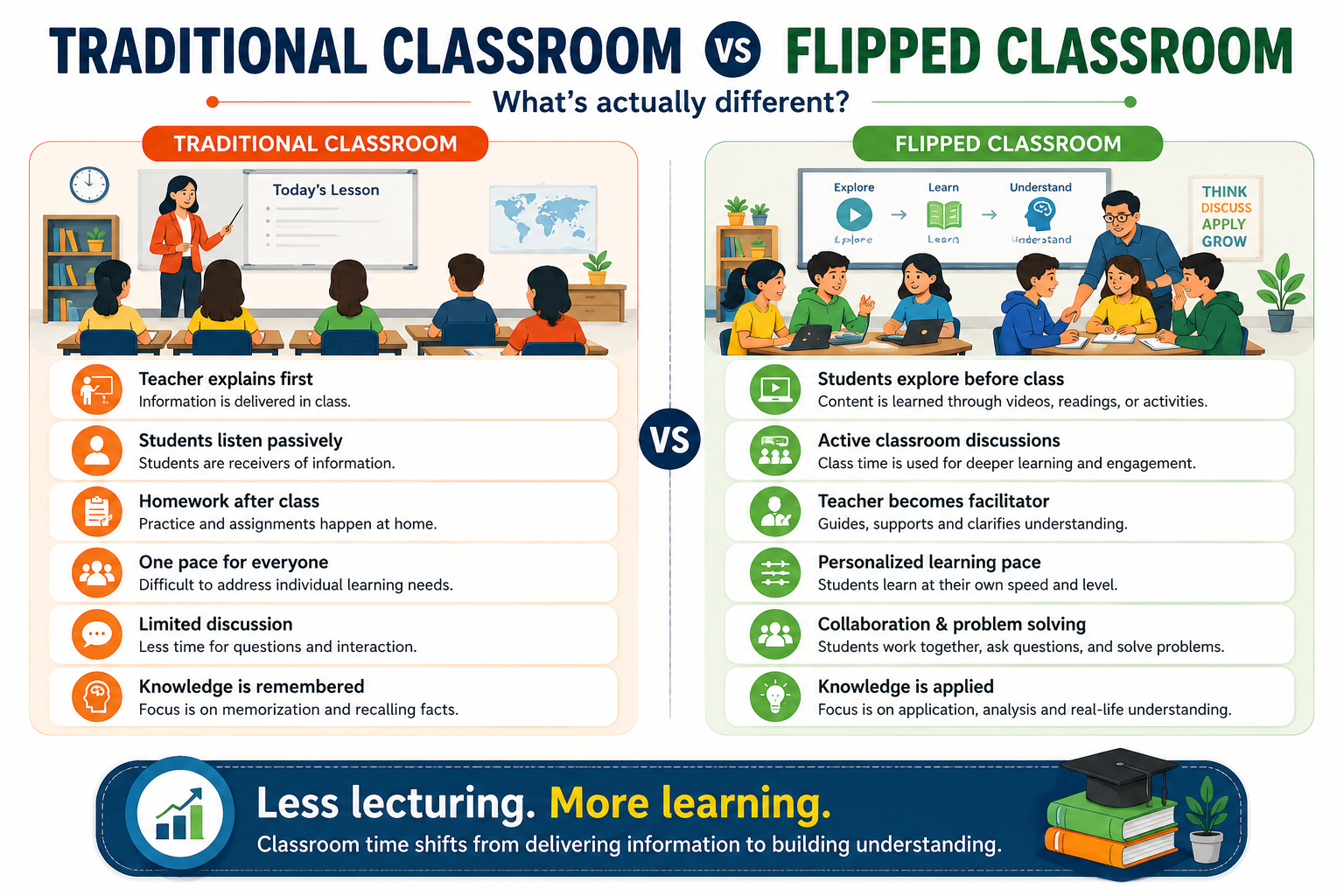
Schools will first need adjustable seating arrangements as the static rows of seats will not be able to have group activities in the class or a flexible learning environment.
They have to change the learning culture where it is not teacher centered education but student centered learning where students pick their own pace and method of learning and professors act as the guide on the side only helping when students need help in applying new information.
Instead, teachers have to give attention in building purposeful content where they have to seek new ways to fit this learning paradigm and design strategies so that students are able to study independently.
Instructors must also learn how to be adaptable and sensitive so that they are able to understand who needs help, in what ways, and why.
So this type of learning might have the least focus on teachers but this dynamic teaching technique needs a high level of pedagogical expertise.
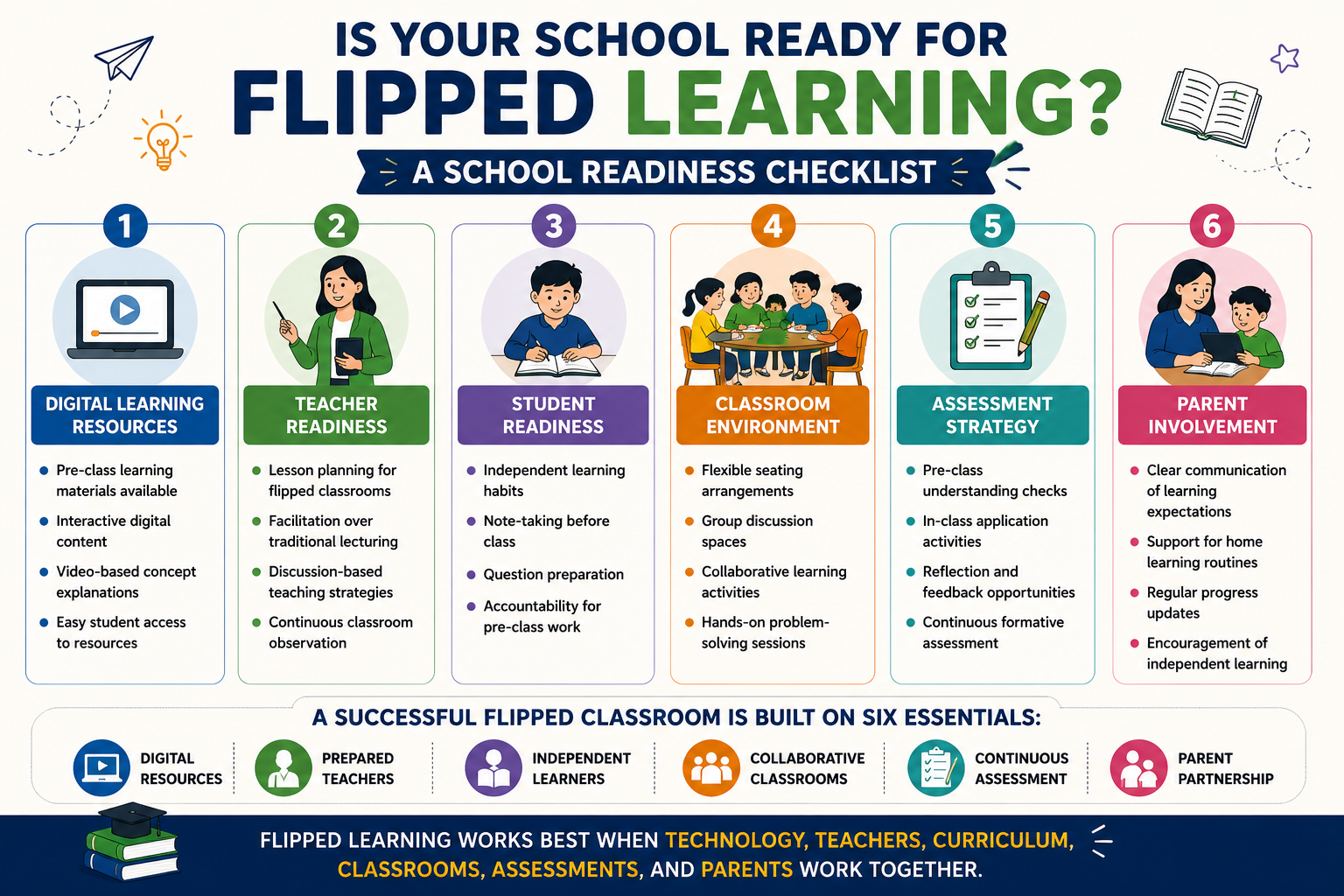
If students have to prepare before they come to class, then what should be done if they are not prepared. Understand whether students are ready to engage in meaningful learning activities.
How should the learning be structured for students when at home and when in the classroom. What should the instructional approach be as per the grades so that students obtain all the necessary skills.
How to communicate the learning expectations to the students and families too.
So maybe you can start with a pilot program at first where you do not flip the entire curriculum but choose one grade, a subject, or a particular lesson.
Starting small will help you scale the plan as per the feedback.
For example, the Shri Ram School in Delhi implemented the flipped learning model in their middle and higher classes as an experiment and the VIBGYOR high school experimented it in science subjects solely.
In order to differentiate the instructions and identify the potential gaps, assessment is important.
So how to assess the student’s knowledge and when to assess it. Should they complete it at home or in class after learning is done? How would that be communicated to families if assessments happen at home?
How to address learning gaps and what resources to be used.
Should it also be done before starting the new model of learning.
The clarity on these will help teachers understand student’s needs and accordingly plan on building the content.
Schools will have to see through and plan lessons and resources that would be appropriate for students to complete their studies independently.
The concepts and activities that might require direct teacher support.
The right way to structure the class timing so that there is collaboration, discussion, and project based learning all synchronised in a right way.
The intent should be to address all the 21st century skills while building a solid K-12 education program that parents can also trust.
Apart from this, the school will need to invest in the right digital tools, ensure that the teachers are trained well, align the activities to be done in class with the pre-class work, ensure that all students have enough digital access, and accordingly collect and act on feedback.
For primary schools, flipped classrooms can be built if they introduce resources in the classrooms that give them easy support for digital learning too. And if there are teacher guidelines, their teacher training costs also reduce.
Schools can adopt LumaLearn which has Phonics Books, English Coursebook & Workbook, Math Coursebook & Workbook, Hindi Coursebook & Workbook, General Awareness Book, Art & Craft Book, Story Book, Rhymes & Balgeet Book, for Nursery, LKG, & UKG.
It is built on Panchakosha Theory of Education and comes with LumaLearn Digital Videos which has beautifully designed animations to make lessons engaging.
The innovative visual learning, aligned with LumaLearn books, helps teachers in executing the flipped learning model by asking students to watch the videos and then discuss that same topic in the class next day, ultimately completing the curriculum as well.
For classes 1-8, schools can build flipped classrooms with ThinkTrail, which has visual search technology where students can scan any text, image, and then learn the topic through immersive 3D videos.
It is especially designed for class 1-8 students where teachers can ask students to pick a topic and explore it overall and in class they can have interactive learning.
It also has assessment and fun quizzes for schools to understand how the students are performing and eventually match the parent expectations.