Akhil Bharatiya Shiksha Samagam: How is Education Evolving for the Future?


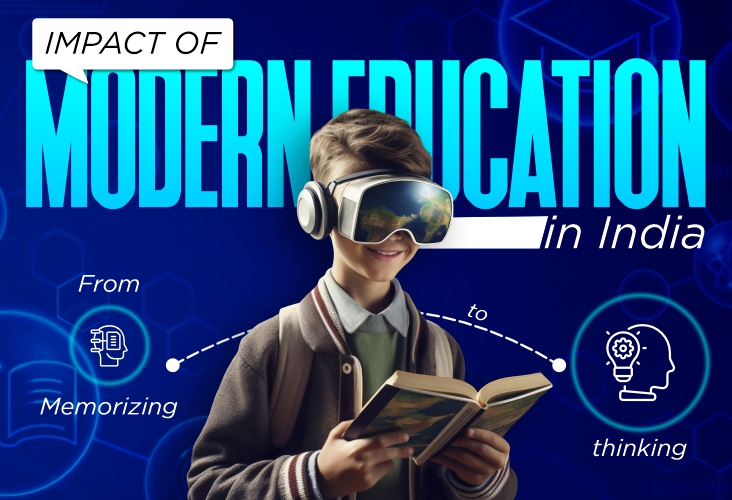
Over 250 million (25+ crore) students are part of India’s K-12 system and 65% of these students will work in jobs that don’t yet exist. Schools are increasingly adopting digital resources, smart classrooms, and hybrid learning models, introducing skills like critical thinking, problem-solving, coding, and AI literacy early in their childhood. Even employers are prioritizing skills over degrees as learning is shifting from what students know to what they can do with what they know.
This shift clears one thing!
The modern education system is no longer just about academics. It needs to prepare students for an unpredictable, fast changing future.
So let’s first understand what the modern education system is and how it has impacted the overall structure of how Indian education functions now.
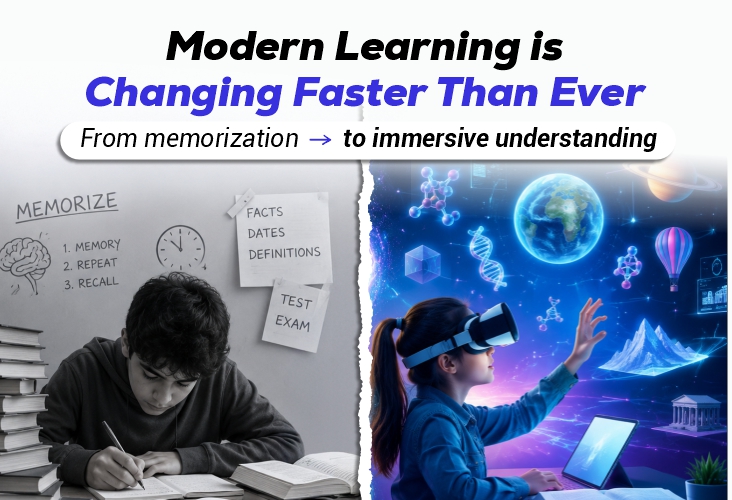
Modern education is not just a change of one thing. It comes in a combination of multiple shifts that happen together. There’s focus on skill based learning rather than just memorizing the concepts, with technology well integrated in classrooms, that promotes flexible and multidisciplinary learning.
Instead of having one final exam there’s continuous and competency based assessment focusing on holistic development overall.
Here’s a detailed guide on what the modern educational methods of teaching are and how schools can set up a classroom that will work today: Modern Education Methods of Teaching
The Modern Education System does not just change how students study but can also fundamentally change what students are being prepared for.
Here are the most significant and vital advantages of modern education system has brought in Indian education.
One of the biggest shifts in modern education is access.
Earlier, quality education depended heavily on:
Today:
Have made learning accessible beyond physical boundaries
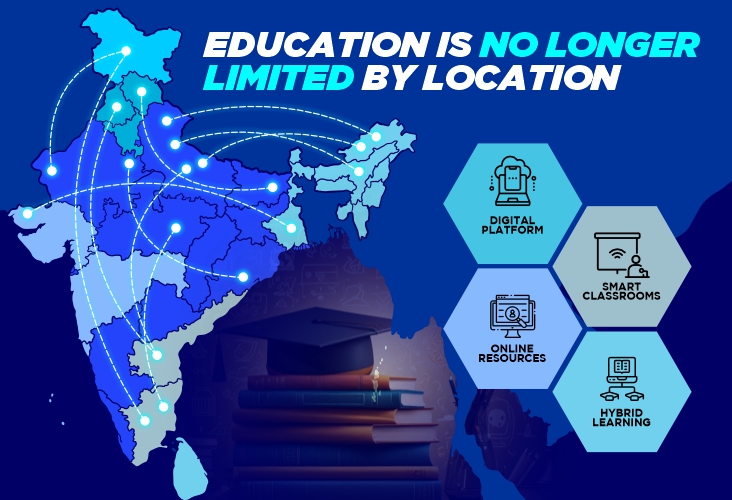
Students from smaller towns and remote areas can now access the same quality of content as those in urban centers.
This has made education more:
Inclusive | Scalable | Opportunity-driven
Traditional methods of education systems focused on:
Versus
Modern education focuses on:
So now there are visual learning tools, lessons that include real life examples, and questions that are also application based. Which has made students retain information longer, understand the “why” behind the concepts, and even apply knowledge in different aspects or contexts.
This builds deeper and more meaningful learning
Education today is not limited to textbooks.
From an early stage itself, students are being introduced to coding and computational thinking, logical reasoning, analytical problem-solving, communication and presentation. This development in skills help them align their learning with the application required in future careers and life situations.
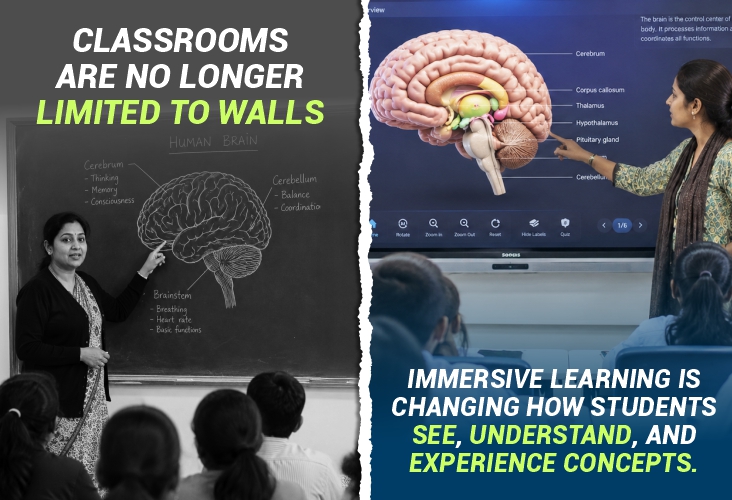
With smart boards, interactive simulations, video-based explanations, AI-assisted tools, learning concepts have become more visual, more interactive, and more engaging. This improves both attention and understanding as they get to learn at their own pace, choose different formats as per their convenience whether visual, audio, practice-based, and the best part of all this is that they can revisit the concepts anytime.
Modern education shapes arts, sports, communication, life skills, by helping students solve questions that are case based or on real-world scenarios. This way they get insights on handling unfamiliar problems while thinking independently on what the solutions can be. This ultimately builds confidence in them giving them a better start.
So students don’t just grow academically but also socially, emotionally, and creatively.
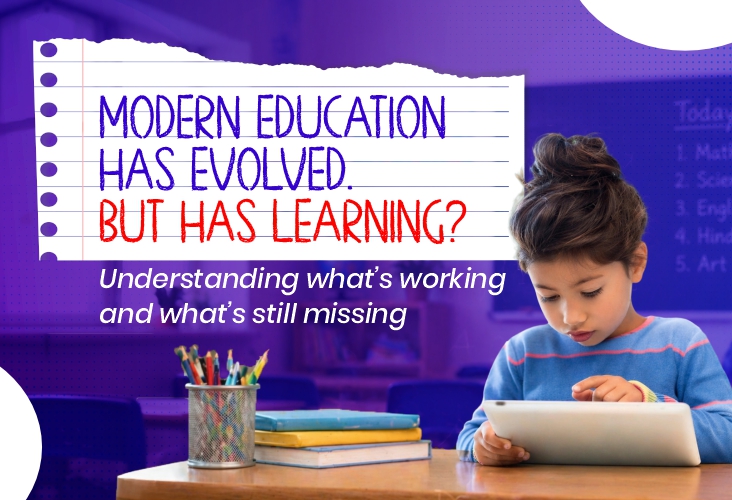
Even though modern education has evolved in the right direction, there have been certain aspects that show that evolution solely does not mean perfection. Many of the changes brought in the modern education system have led to new challenges affecting the modern education system, especially in how students are learning, thinking, and applying knowledge in their best capacity.
Here are the key gaps that still exist:
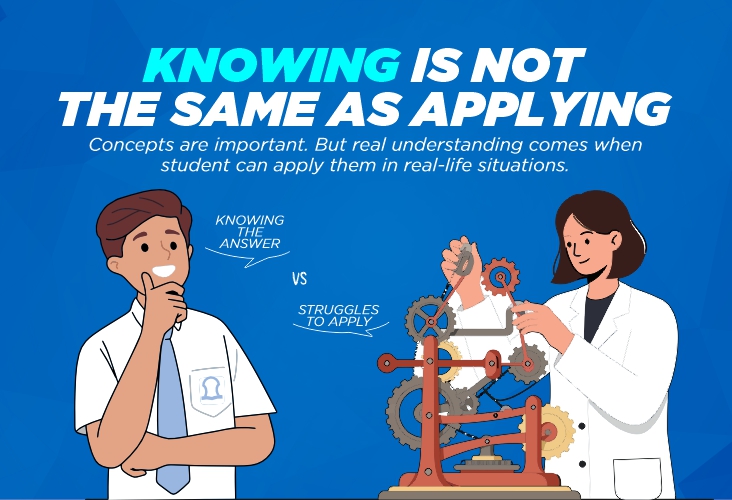
Students have full access to better content, better explanations, and better resources. Yet many students are blank when it comes to dealing with unfamiliar or real world problems. And this mainly happens because even though learning has shifted from memorization to understanding, the gap of applying the concepts that have been understood still prevails in most places. So students might know the answer in theory, but are not able to use it in practice.
Technology has improved access and engagement but somewhere have made students be excessively dependent on the technology that has led to shorter attention spans, reduced deep thinking, and even passive learning habits. Students are somewhere consuming more knowledge and executing them less overall. So learning has somewhere become consumption-heavy than effort-driven.
With increase in screen based learning, digital platforms, and self-paced modules, what has been compromised is the human element of education. So now students have less one-on-one guidance, or rather they won’t even need one because every information is just one search away. This limits mentorship too, reducing the emotional connection with teachers.
There’s unlimited information today. And students can access whatever information they want in a fraction of seconds. But having more information does not always mean better learning. It often leads to students getting restricted to surface-level understanding, skipping the fundamental concepts, and sometimes jumping between topics. So students might know a little about many things but are unable to master one concept deeply.
While the access to education has improved, the quality of education has not scaled equally. There is still a vast gap between schools that have advanced resources and schools that provide limited infrastructure. Even when it comes to guidance, some students can afford guided learning and some rely only on self-study. So at times, this can create uneven learning outcomes.
While the modern education system has been moving forward, we’ve seen the real challenges that still remain.
So the best to keep everything at par would be to not replace the system but strengthen what already exists.
And Mittsure has been working for schools to strengthen themselves and align with modern education system effectively.
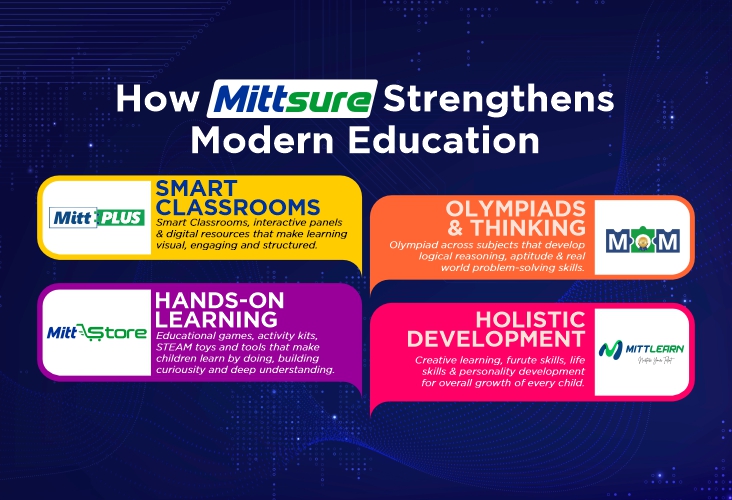
With Mittplus solutions, schools are able to set up smart classrooms management, integrate interactive panels and digital resources, and blend well with modern education to make learning more visual, engaging, and structured.
To ensure schools align with application-based learning, there’s Mittsure Olympiad Masters (MOM) making schools provide students with a platform so that they can sharpen their logical reasoning, aptitude, real-world problem solving skills, while building confidence in tackling unfamiliar questions.
Participating in Olympiads across subjects like:
Students move from learning answers → to thinking through problems
And while modern education is becoming screen-heavy, there’s a way educators and parents can balance human interaction and deep level thinking in students.
With Mittstore!
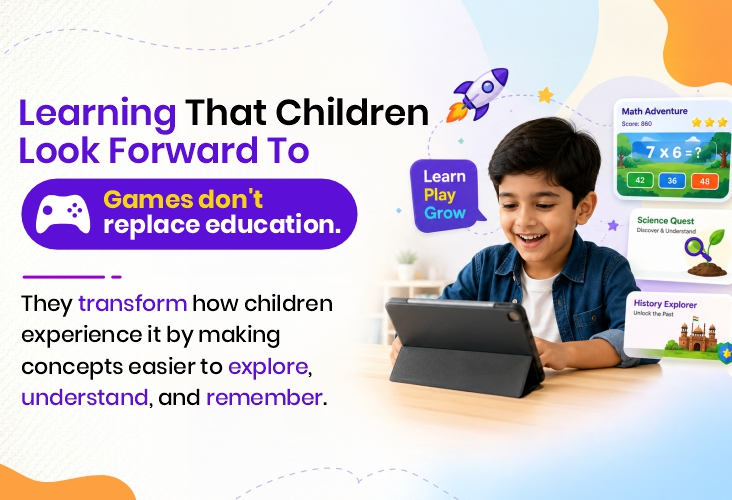
There’s Kids educational games, activity kits, STEAM toys, etc that students learn by doing while building curiosity and strengthening their real understanding.
Again, to ensure that children do not get busy academically and miss out on other aspects of development, Mittlearn brings Creative learning (art, music, dance), Future skills (AI, robotics), Life skills and personality development among others. This helps students grow intellectually, creatively, and socially.
The goal is not just to keep up with modern education. It is to make it work better for every student.
While modern education has the right intent Mittsure helps schools deliver the right execution.
It has made learning more accessible, skill-based, and future-focused, but gaps in application and personalization still remain.
Key challenges include lack of application-based learning, over-reliance on technology, and limited individual attention.
Modern education improves engagement and skills, while traditional systems were stronger in discipline and depth, both need balance.
Because access to content has improved, but consistent practice and real-world application are still limited.
By combining technology with structured practice, skill-based assessments, and personalized learning approaches.
Mittsure strengthens learning through smart classrooms, Olympiad exams (MOM), hands-on tools (Mittstore), and holistic education programs (Mittlearn).
It connects technology, thinking, practice, and skill development into one integrated ecosystem for schools.