Akhil Bharatiya Shiksha Samagam: How is Education Evolving for the Future?


Every generation grows up in a different world, and the way they learn should evolve in discovering new possibilities. In today’s classroom, there can be combination of books, experiment, conversations, digital tools and creative idea that helps students understand the world from different perspectives.
But who decides in which direction education should move? What are key ideas that can help schools respond to changing learner needs? And How can experiences from different parts of the educational ecosystem come together to shape these possibilities?
These are some of the larger questions that are at the heart of the Akhil Bharatiya Shiksha Samagam (ABSS). Akhil Bharatiya Shiksha Samagam is considered as a platform that brings together diverse voices from India’s education ecosystem to discuss initiatives, ideas and possibilities for the future of education. It is served as a platform where educators, policymaker and academicians and other industrialist come together to discuss the progress including priorities and future direction of education.
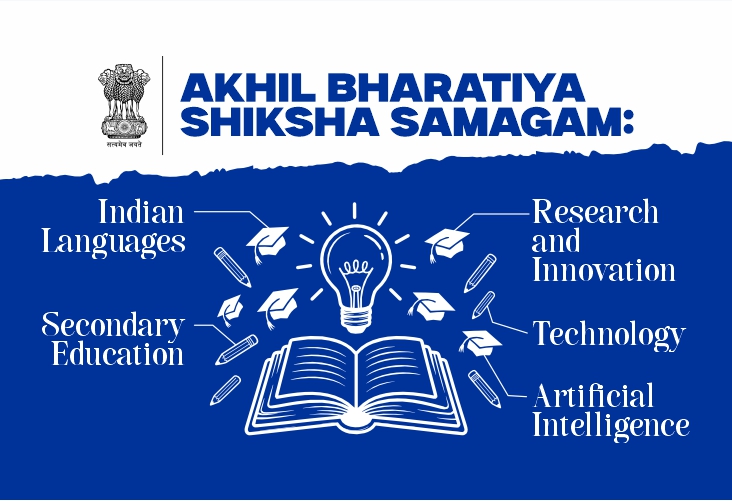
From Indian languages and research to artificial intelligence and secondary education, ABSS has created space for discussions around some of the areas that are influencing how education in evolving.
Hence, what are the key ideas emerging from the Akhil Bhartiya Shiksha Samagam and how could they shape the learning experiences of tomorrow?
The Akhil Bharatiya Shiksha Samagam (ABSS) brings together different perspectives from India’s educational ecosystem to exploring ideas, priorities and practices that can help in shaping the future of the learning. Its discussions connect different stages and dimensions of education from the early years of schooling to secondary education, innovation and research. The Samagam helps in creating space to discuss role of technology, Indian languages, skills, knowledge systems and inclusion for strengthening educational experiences.
At the centre of these discussions, there is a larger question: How can education prepare learners with more than knowledge and help them develop the ability to think, explore, communicate, create and adapt?
This focus can be understood through different important areas. Bharatiya Bhasha highlights key importance of language in making learning highly meaningful and accessible. Alongside, language learning, the focus is on research and innovation that helps in encouraging a culture of problem-solving, inquiry and discovery. Further, secondary education brings attention for developing skill-based, academic and future oriented pathways for students. At the same time, the enhancing role of Technology and Artificial Intelligence raises new possibilities for learning, teaching and educational access.
Together, these core areas show how ABSS connects with policies, practices and innovation and brings attention to the different needs of learners and evolving educational landscape.
The ideas involved in discussions through ABSS invite educators for reconsidering how students demonstrate what they have learned. Instead of limiting to examinations and written answers, schools can provide high level of opportunities for learners to create, explain, investigate and present their understanding in different ways. In the classroom, student involve in demonstration of knowledge by preparing a model and explaining a concept to different classmates and completing a group project with finding a solution to practical problems.
For example, while studying environmental conservation, students could research a local issue, collect observations, suggesting possible solutions and prepare awareness material. This activity can help in bringing together subject communication, knowledge, creative thinking and teamwork.
These approaches help in connecting with the objectives of NEP 2020 that focuses on conceptual understanding, critical thinking and the development of varied competencies. This encourages teachers for considering not only what students focus on remembering, but also how they apply knowledge and responding to different situations.
In this way, the classroom becomes a space where learning can be effectively determined through actions, ideas and meaningful outcomes.
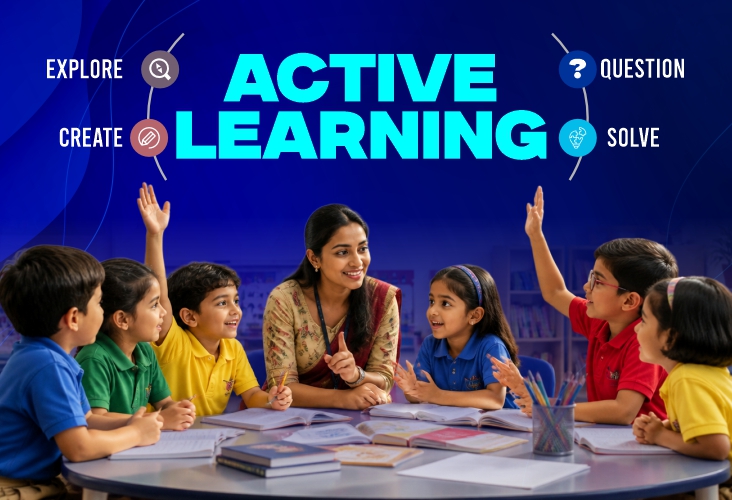
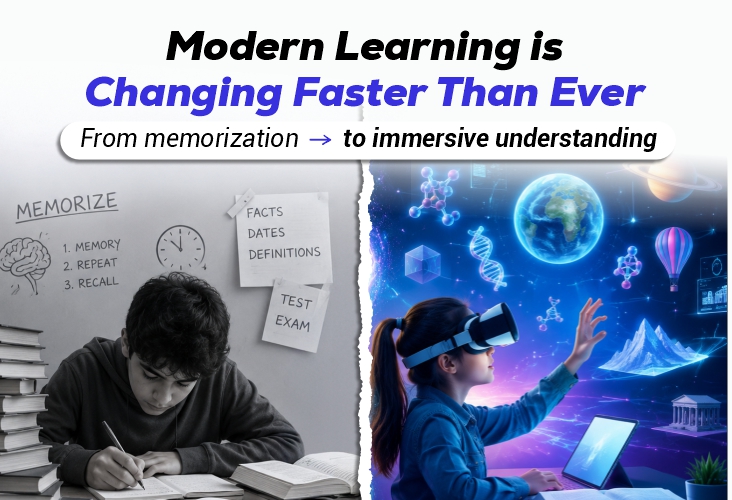
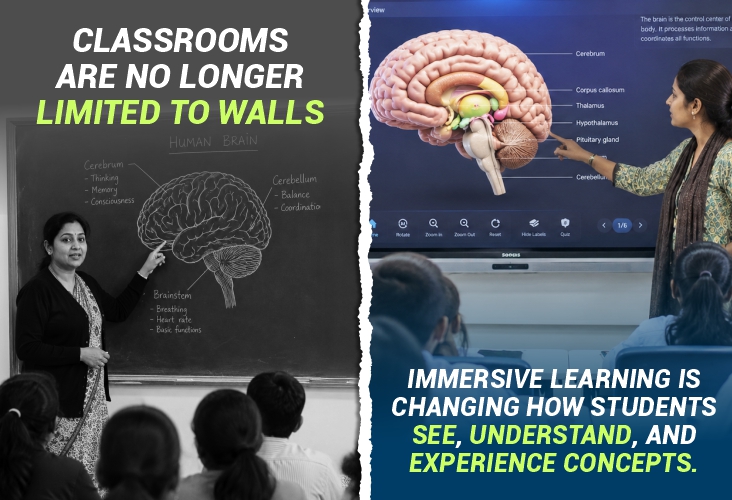
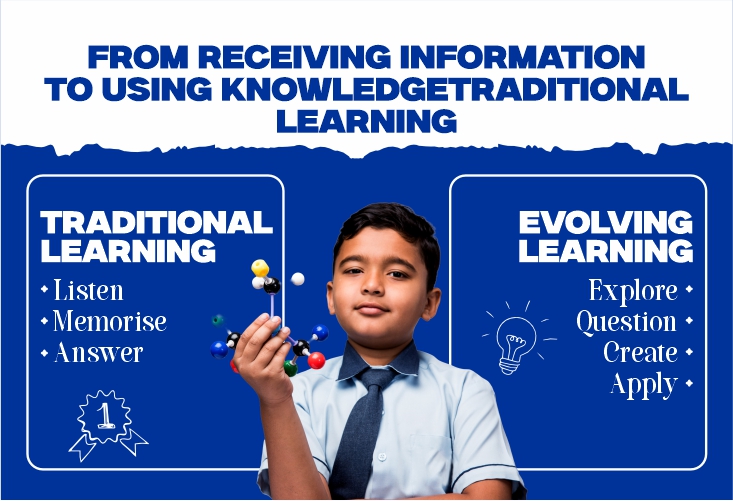
The discussions around Akhil Bharatiya Shiksha Samagam highlight important shift in participating in the educational processes. Learners are transitioning away from passive, textbook-centric learners of information toward flexible, active and future-ready contributors in the society. With this change in the process of education, students are increasingly viewed as active participants rather than simply as recipients of information. They are involved in the process of exploring ideas, asking questions and taking effective ownership of their learning process. This approach helps in encouraging independence, curiosity, decision-making and problem-solving ability. It maximises study engagement among learners in meaningful way.
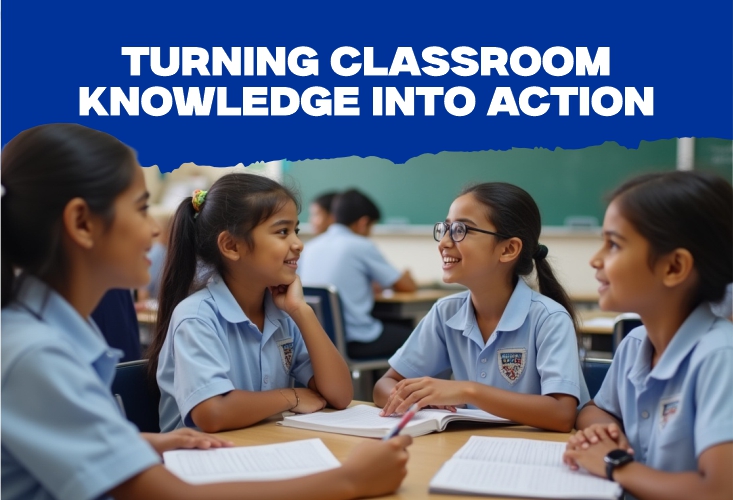
Hence, this where Active Learning becomes highly important and effective for education system. Instead of only listening to explanations or memorising information, students can effectively participate in conducting experiments, discussions, working on projects, presenting ideas and solving problems. For example, for maximising language learning, students can develop a short story. They can perform it as role-play, discuss characters and ideas with their classmates.
These approaches help in connecting with the broader vision of NEP 2020 that emphasises experiential learning, critical thinking and conceptual understanding with the development of varied competencies. These ideas discussed through ABSS reflect this evolving role of the learner as education is not only knowing the answer but also about understanding how to apply, communicate and find it.
If the world around learners keeps changing, should learning remain the same?
The next generation of education may be defined not simply by what students know, but by what they can do with what they know. For example, a student knows about formula for calculating different areas, however can they use it to plan layout and dimensions of a room? A student knows about how to write an essay, but can they know how to communicate an idea that makes another think?
This brings forward a simple thought: “The purpose of learning is more than just knowing, it is about being able to do more with what we know.”
Future learning can develop high level of opportunities for the students as it connects subjects with everyday experiences and interests. A science activity session could begin with a question that helps students to observe. A mathematics learning session could involve planning related to small budgets and language project could turn session into a podcast, presentation or story.
The Akhil Bharatiya Shiksha Samagam brings together conversations related to changing landscape of education and the possibilities that involve ahead. The discussion reflects a broader movement towards learning that helps in encouraging student to explore, think, adapt and apply. These ideas continue to shape educational system, the future of learning will depend not only on what students are taught, but also on the different opportunities they receive to use their knowledge and responding to new situations. In the end, the evolution of education is about creating learning experiences that helps in preparing students for discovering, creating and achieving future learning.
Akhil Bharatiya Shiksha Samagam is an annual national education summit program that is organised by the Ministry of Education in India for guiding and reviewing the implementation of National Education Policy 2020.
The core areas involved in the discussion of ABSS are Indian languages, research and innovation with secondary education, technology and artificial intelligence.
The ideas discussed can help in encouraging approaches such as experiential learning with active participation, technology-support, practical learning with greater focus on skills and knowledge.
ABSS helps in creating a space for different voices from the education ecosystem that involve in sharing ideas and discussing how learning can respond to changing needs of learner and future opportunities.