Akhil Bharatiya Shiksha Samagam: How is Education Evolving for the Future?


Only 5.2% of jobs require no communication at all, so 94.8% require some human interaction.
Even the UDISE+ 2021–22 data, as reported in a secondary analysis, shows peer learning in 51.9% of government and government-aided primary schools in India, 51.8% of upper primary schools, 50.4% of secondary schools, and 42.2% of higher secondary schools.
The same source reports that, nationally, 337,643 primary schools, 152,010 upper primary schools, 42,061 secondary schools, and 32,744 higher secondary schools had introduced peer learning.
Even if you look at data from the states…
Kerala is a high-adoption state, with peer learning in 82 .6% of primary schools, 83.3% of upper primary schools, 83.4% of secondary schools, and 81.6% of higher secondary schools.
Punjab also shows strong adoption, with 88.2% at primary, 83.6% at upper primary, 77.6% at secondary, and 75.1% at higher secondary.
Rajasthan is reported at 45.9% primary, 52.2% upper primary, 51.7% secondary, and 52.3% higher secondary.
Delhi shows a mixed pattern, with 79.2% primary, 71.8% upper primary, 79.5% secondary, and 80.4% higher secondary schools using peer learning.
All these insights prove that collaborative learning strategies are essential in the classrooms. Schools can add to the development of students by bringing in peer learning. These approaches are also becoming an important part of modern teaching and learning models. So if you are a principal, teacher, educator, or L&D leader, this blog is a must read.
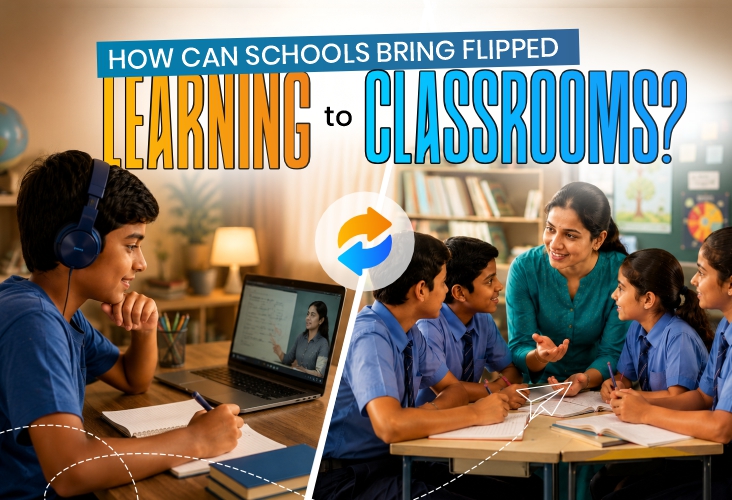
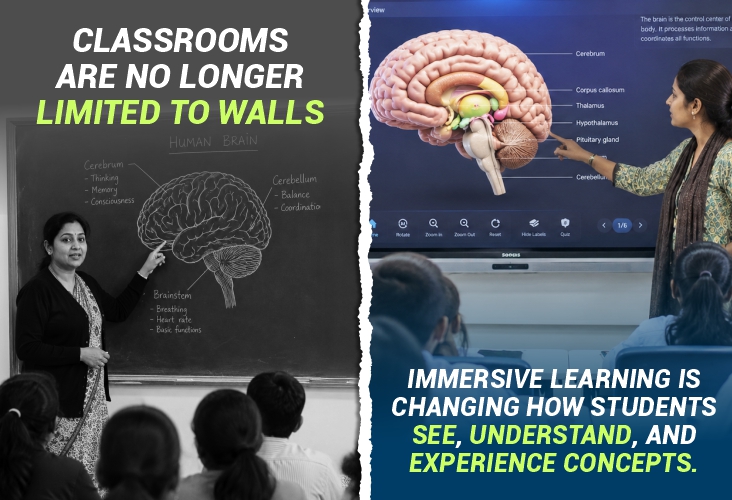
In traditional classrooms, the teaching generally is lecture based. It often begins with an explanation where students sit and listen to the concepts and topics taught by the teacher in the class. Approaches such as flipped learning can also help shift students from passive listen towards more active participation.
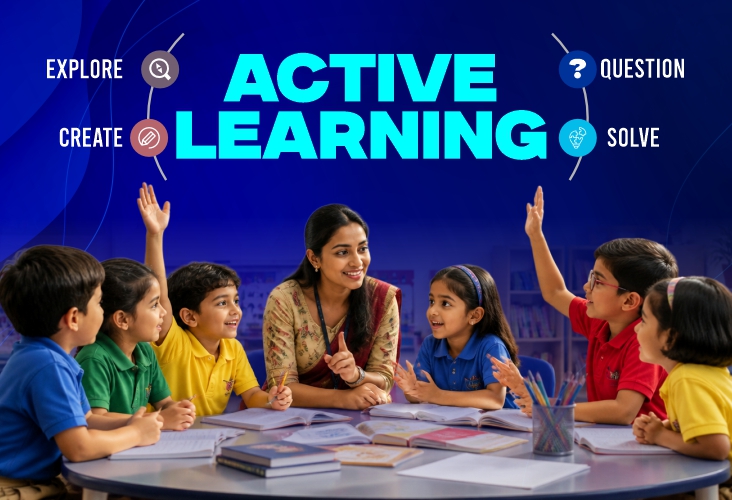
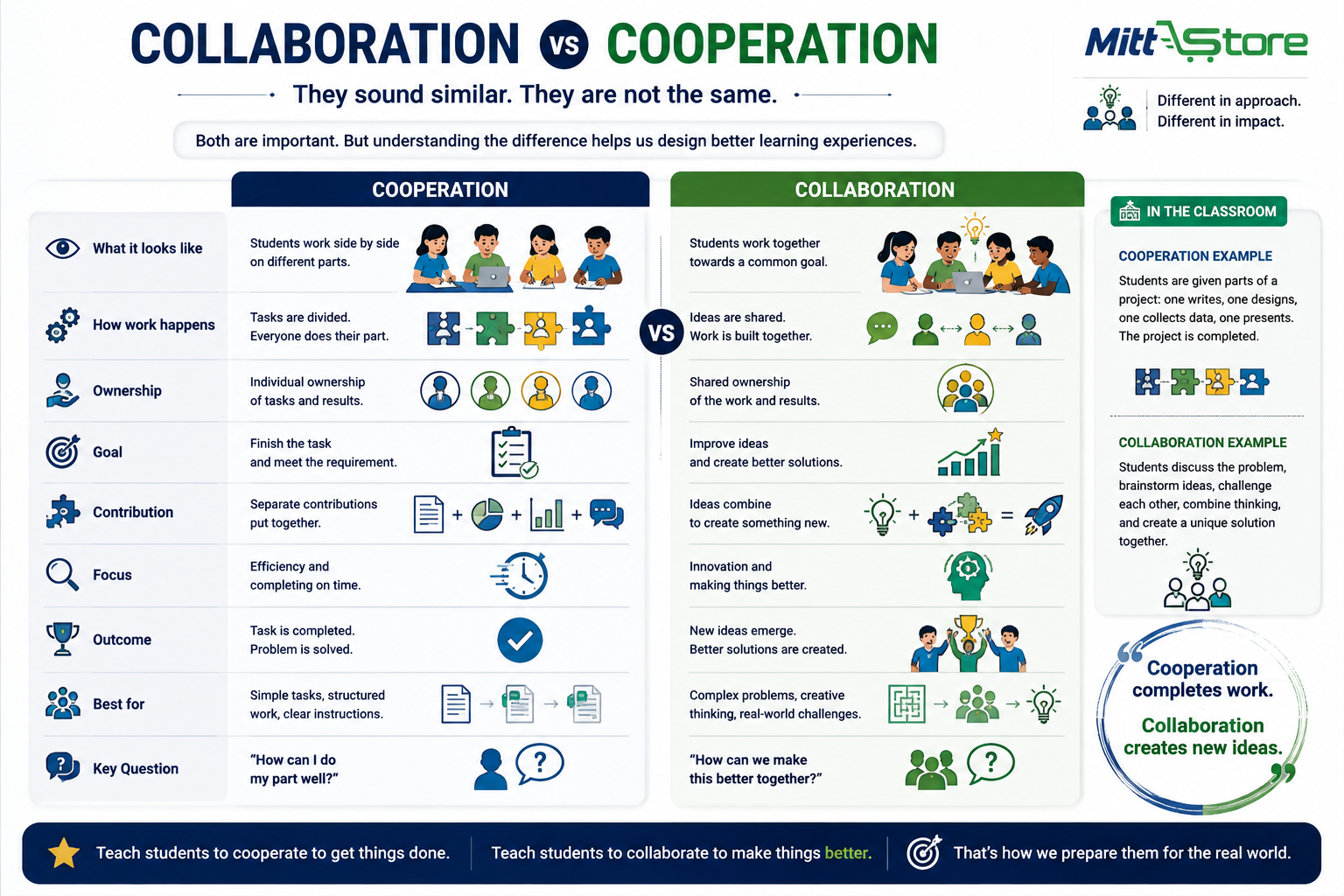
With collaborative inquiry the scenario of the same classrooms becomes a bit different where students have a question and then they work together with the classmates to find out the answers instead of going to the teacher with their query and getting the answer.
So let’s say if there’s a topic of seasons going in the class, instead of teachers explaining about the change in seasons and how it happens, a questionnaire round of collaborative inquiry cycles can be initiated where a teacher raises a question like why is it summer in one country and winter in another. Then students discuss in different groups, sit to research, debate opinions amongst themselves, and accordingly provide evidence of what makes their opinion logical.
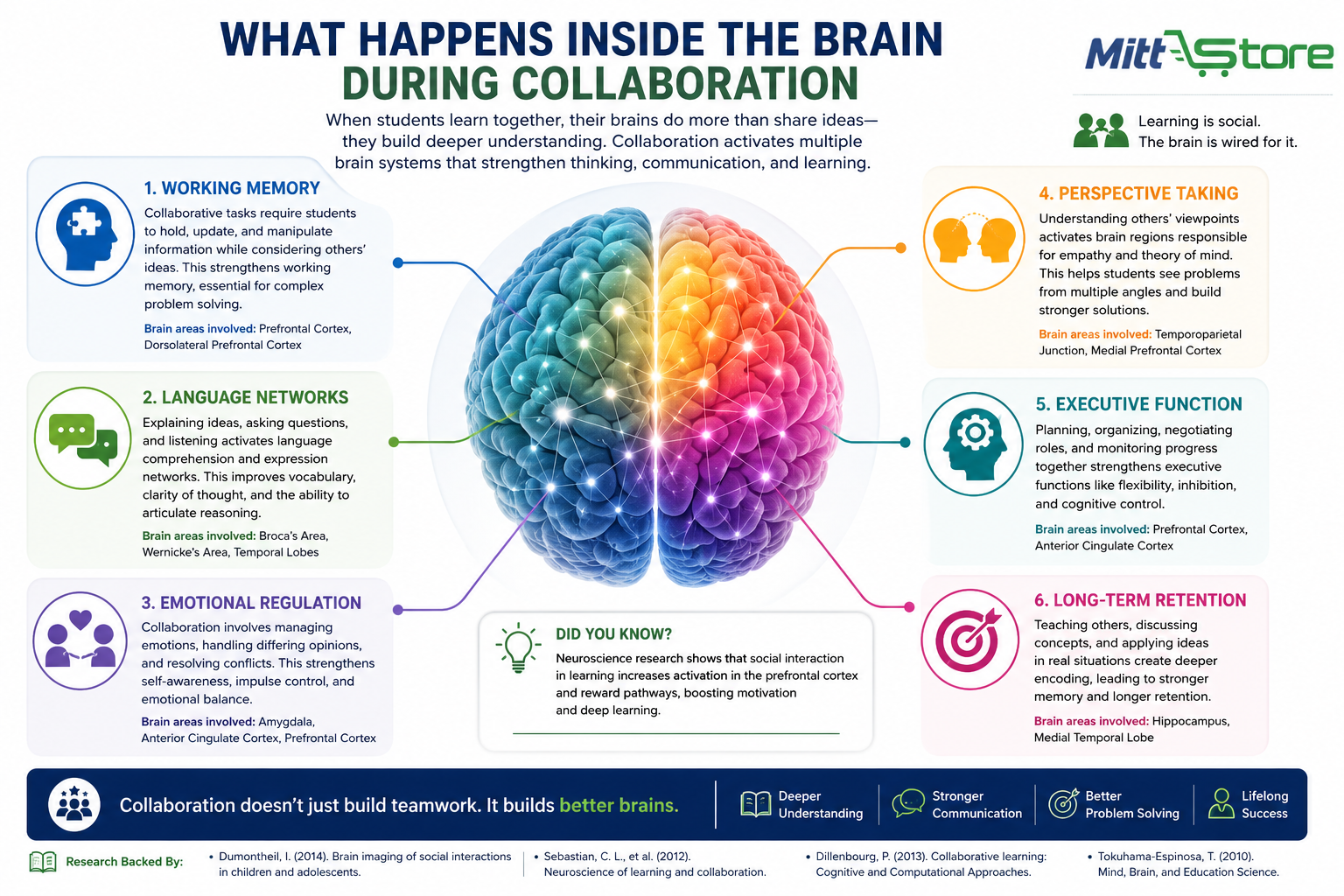
There has been consistent research that shows structured collaboration will be beneficial if students are able to explain what they are thinking, justify what they have been thinking, consider other’s responses and broaden their perspectives. This way, they also improve academic achievement and will also strengthen their communication and the ability to understand, monitor, and control their own learning and mental processes.
With ThinkTrail Chronicles, students get to investigate the topics before they are taught as the lessons begin with questions that provoke students to think instead of starting with definitions or theories directly. Then there’s Mittsure Lens that helps students visualise the concepts in science, social studies, and mathematics, giving students an experience in AR and 3D videos, giving every student a shared reference point that they can use to discuss.
When students get challenges to fulfill outside what they study from the textbooks they start to develop a thinking power outside their daily curriculum. There are three phases where teachers can indulge students in challenge based learning. The first phase being engagement where there’s a big idea that turns into a challenge.
Then students start investigating into the challenge by researching and inquiring through what they know to build subject knowledge. And accordingly then students act (acting on the research being the third and the final phase) where students find solutions as per their intelligence. The purpose is not that students have to find that one correct answer but create different meaningful solutions from the ideas that they were given as the challenge in the first phase.
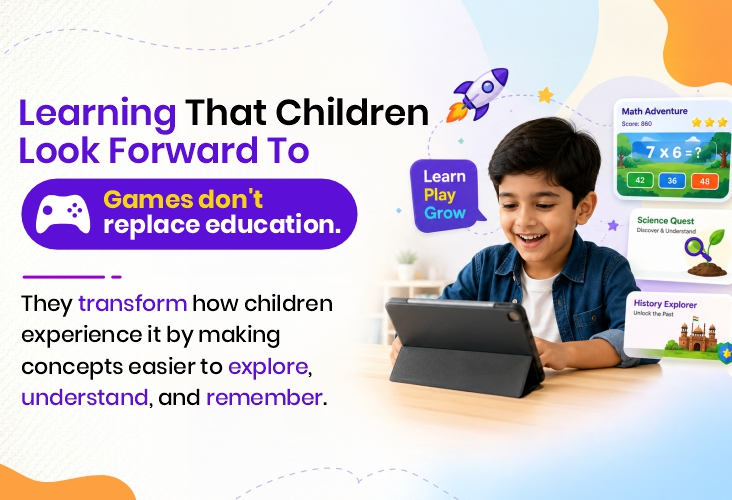
The ThinkTrail Chronicles has fun activities in the books that help teachers in suggesting activities that can be taken as a challenge and then executed. Teachers can also explore game-based learning activities to make problem solving and participation more engaging for students. There are also STEM Toys for Kids and other resources from Mittstore so that students are able to build prototypes, test, and accordingly improve their ideas.
Make the classroom as if it is a design studio where students work together, share their work in progress, and engage in peer discussions, feedback and co-creating practical solutions. This type of learning will shift the focus from traditional lectures to collective, hands-on problem solving. When students critically analyze one another’s ideas, justify the reasoning, and accordingly find the solutions, it helps them develop high-quality collaboration.
There are STEM Hands-on activities, engineering games, and even ThinkTrail experiential projects naturally encouraging iterative designs. Students can continuously improve prototypes while teachers observe their reasoning and logical inference instead of simply evaluating the final product.
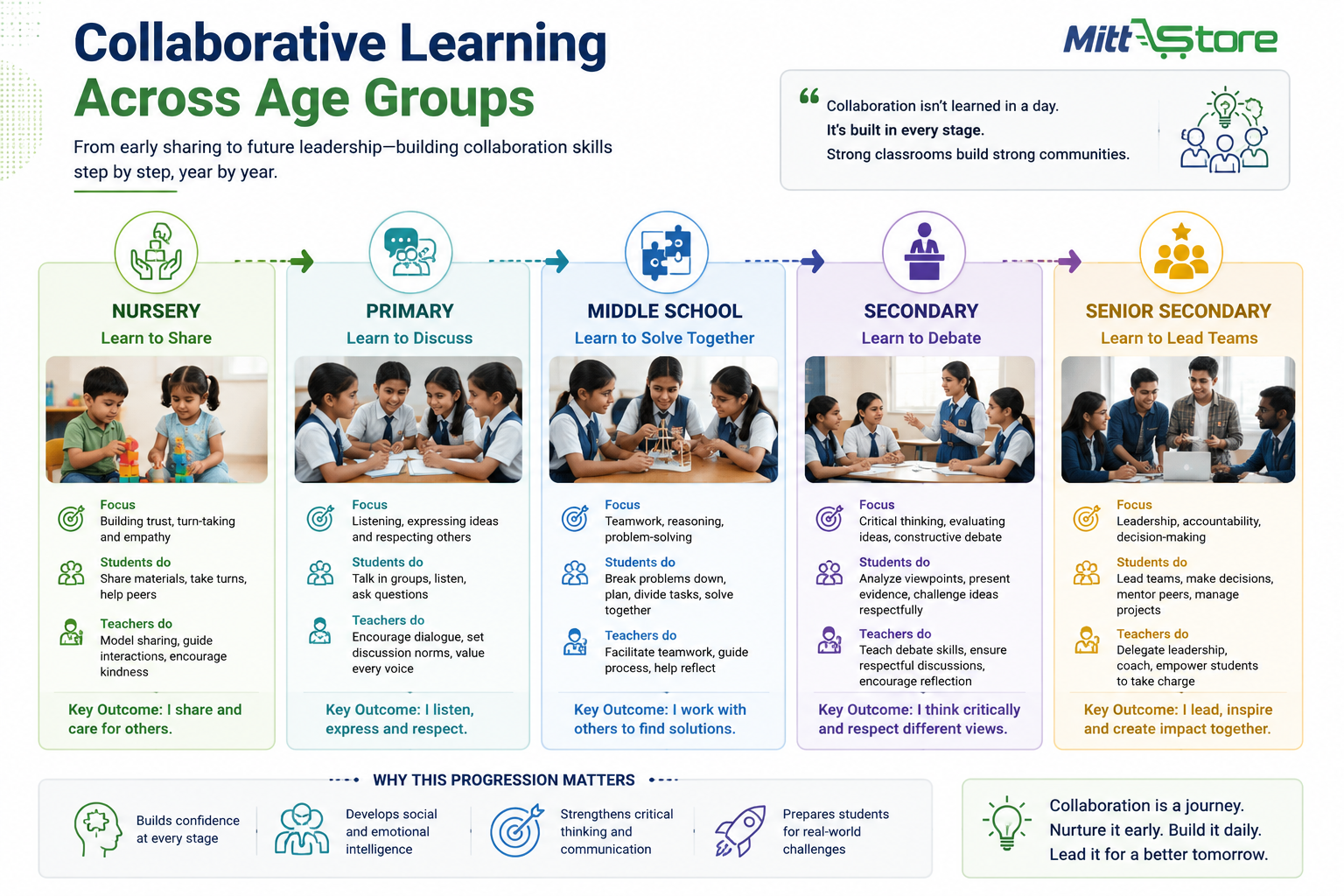
Apart from asking students to collaborate with each other in the same classrooms, this kind of collaborative learning strategy helps students in seeing different perspectives so maybe teachers can collaborate between different classes of the same levels, or different grades so that they learn how to interact with their seniors and juniors. Or teachers can also bring up challenges that address the real-world problems as they do not fit a single subject but have multiple dimensions to solve the issues. This kind of approach also addresses some of the challenges discussed in advantages & disadvantages of the modern education system, particularly around peer discussions, teamwork, and social interaction. Like a project on climate change involves the science of how climate change works, geography of how climate differs, art of how different climate works, and more.
If a teacher builds a team and leaves students to complete the challenge on their own, then one student might end up leading all the time and the other end up simply following the rules. If a teacher follows the logic of rotating the leadership among the teams where students are given different types of leadership. One could lead the discussion, another student could lead the research, third could lead the resourcing of materials, fourth could lead the presentation, and accordingly the whole team gets to lead at a particular aspect.
An OECD report also highlights effective collaboration is a teachable competency and develops skills like coordination, communication, trust, while also learning how to share responsibilities.
With the current AI trends shifting the educational landscape, students also have to adapt to what the future holds. With AI, 3D, AR, and VR experiences, students get to collaborate well understanding how the technology works and can discuss better, regulate the ideas, and accordingly share their opinions which simply adds to the student's thinking. There’s Mittsure Lens that encourages students to see concepts visually and collaboratively. Instead of replacing classroom discussions, technology acts as a catalyst so that students can have deeper conversations, research better, and collectively solve problems.
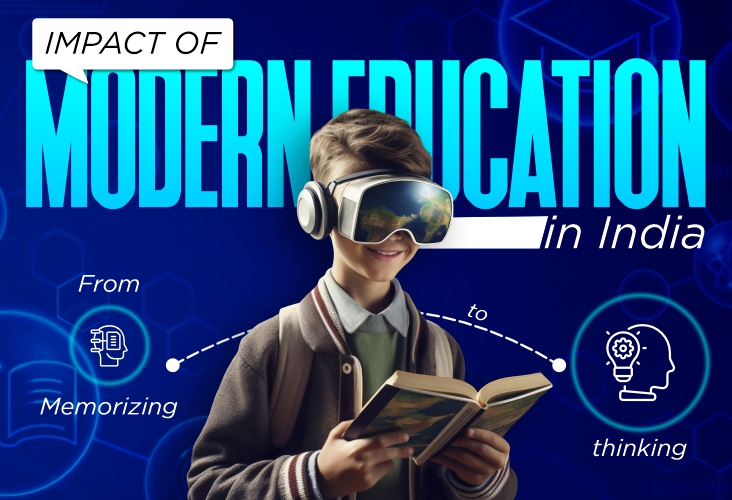
Indian classrooms have always been a place where knowledge is shared with students and learners. With the right resources and collaborative learning strategies it becomes a place where ideas are built together. This shift is also part of the wider impact of the modern education system in India. Collaborative learning is not simply a teaching learning strategy, it teaches students for a future where they are able to work in a team, live collaboratively and build great bonds in their life.