Akhil Bharatiya Shiksha Samagam: How is Education Evolving for the Future?


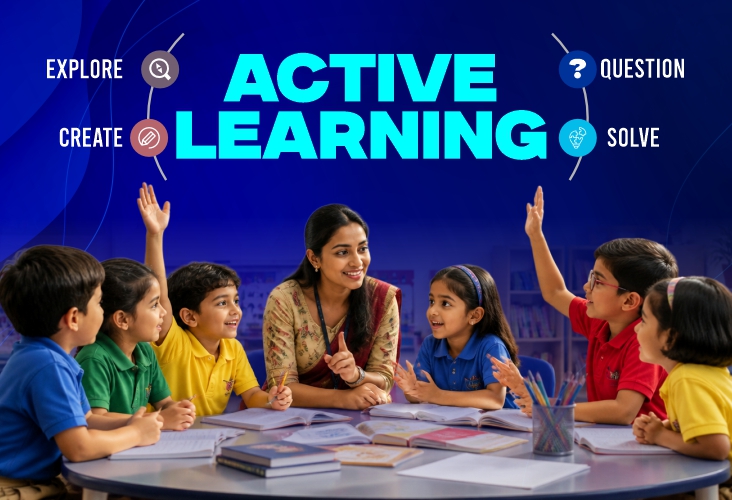
Education becomes more important and meaningful when students actively participate in learning rather than simply being present in the classroom. Exploring ideas, applying concepts, asking questions, solving problems, and working with peers can help turn an ordinary lesson into an opportunity for discovery.
Today’s classrooms are gradually evolving from spaces of instruction into spaces of interaction, exploration, and discovery.
At the centre of this change is Active Learning. This is an approach that helps encourage students to participate more effectively than simply relying on receiving information.
Schools are focusing on holistic education and are involved in a student-centered approach that makes Active Learning an essential part of creating more engaging learning environments. It provides support in academic understanding and focuses on nurturing skills that are creativity, communication, critical thinking, collaboration, and problem-solving skills.
With the growing focus on participation and exploration, active learning plays an important role in the modern educational system.
Active learning is an educational approach and process that has student learning at its center. It focuses on how students learn, not just what they learn. With this, students are encouraged to think independently and explore different ways of approaching a problem.
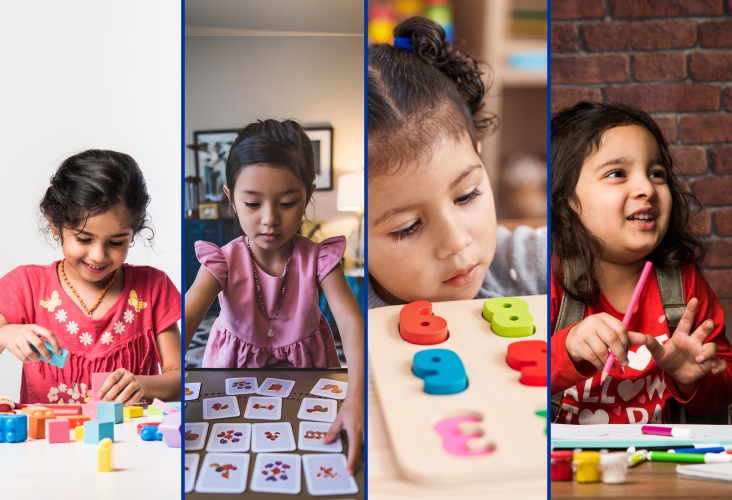
It becomes significant during the early years because children learn effectively through movement, play, observation, exploration, and interaction. For every early learner, active learning includes the following aspects:
These activities help in introducing foundational concepts while also supporting cognitive, language, motor and social development.
This is why activity-based, and play-based learning can play an important role in early childhood education, where children learn by exploring, doing, and interacting with their surroundings.
Active learning helps in transforming students from passive recipients of information to active participants in the learning process.
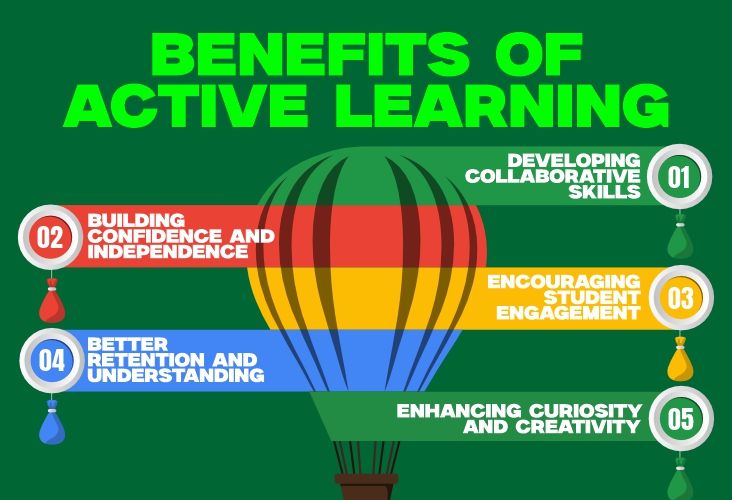
Developing Collaborative Skills- Active participation makes students more involved in classroom activities. When learners are given a chance to discuss, create, question, and contribute, they become effectively connected and interested in the learning process.
Better Retention and Understanding- With hands-on experience, children feel connected with practical situations and make learning meaningful and easy to remember.
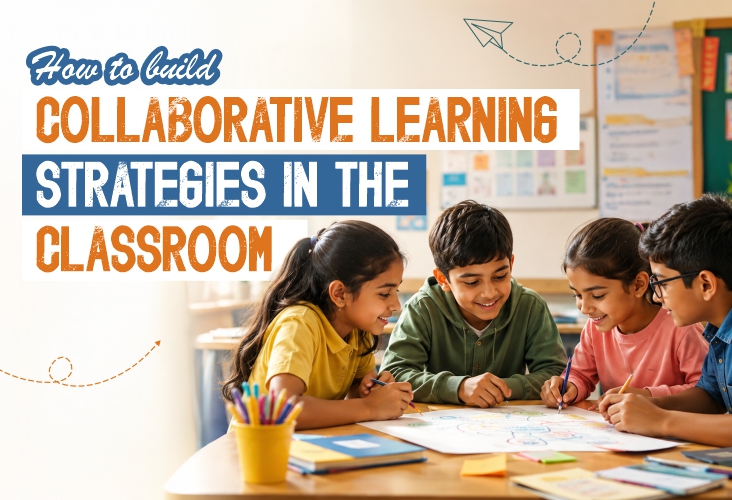
Encouraging Student Engagement- The involvement of group activities helps in encouraging students to express ideas, work together, and listen to others.
Enhancing Curiosity and Creativity- Open-ended activities give children opportunities to explore different ways of approaching a task and ask questions. This encourages curiosity while allowing them to develop creative ways of thinking.
Building Confidence and Independence- By making choices, attempting challenges and learning from mistakes students can help in becoming highly independent and more confident about learners.
Together, these benefits help in representing how active learning supports overall students’ development and making classroom experience highly meaningful. With this, the next step is understanding how teachers can bring these principles into everyday teaching through engaging, simple, and practical approaches.
Applying active learning is an essential part, as students feel more connected and involved in the learning process. It encourages curiosity and helps in developing essential skills, including collaboration, critical thinking, and emotional intelligence. Also, it is crucial to communicate with students by adopting a flexible and open approach with an active listening process.
With a small change in the way of teaching, a lesson can help in making students involved in learning. A teacher can turn a simple science lesson into an exploration by asking students what happens next in the experimenting process. Everyday practical life examples also make learning more meaningful and concepts easier to understand. Instead of using a traditional method of teaching with worksheets, students can count classroom objects, combine groups of pencils, and solve simple problems based on real-life situations.
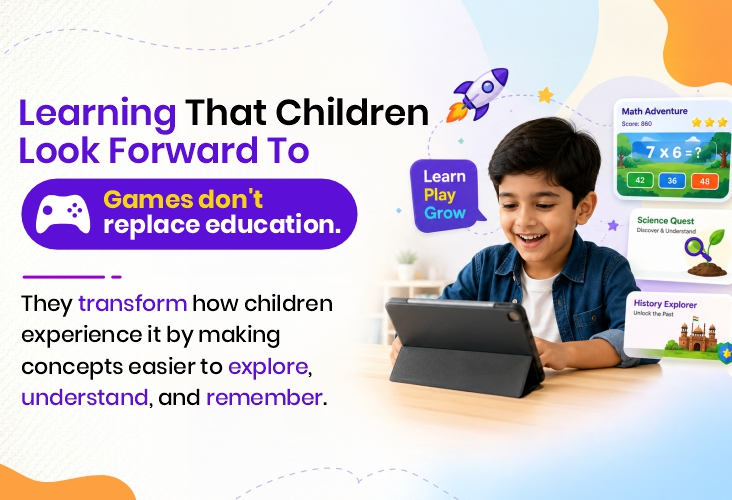
Further, Digital learning can further enrich the classroom experience by making concepts more accessible and learning interactive beyond physical activities. Interactive activities, educational software, and visual content can help students understand complex topics in an engaging way while allowing teachers to monitor their progress and provide timely feedback.
At Mittsure Technologies, this approach is supported by Mittlearn and Mittsure Lens. With this, teachers can scan selected textbook content using digital software for getting access to 3D models with interactive digital content and animations that help in visualizing concepts beyond printed pages. Mittlearn complements this experience by offering digital learning platforms with engaging educational resources that help in encouraging students to explore, reinforce, and revise classroom learning at their own pace.
By combining hands-on classroom activities with innovative and digital learning, teachers can help in creating engaging learning environments where students do more than memorize concepts- they experience, understand, and apply them with greater confidence.
“The classroom of today is not only preparing students for tomorrow’s challenges but also nurturing the minds that will help in creating tomorrow’s solutions”.
In the rapidly changing world, the role of education is gradually expanding beyond academic knowledge. Today’s learners need to develop effective skills that help in adapting to new situations, working effectively with others, and communicating ideas with an approach to solving challenges with confidence. Active learning helps in creating opportunities for developing capabilities through effective classroom experience.
In addition to this, play-based learning is particularly effective during the early years of education. When children build structures with blocks, solve interesting puzzles, create artworks, sort objects, and participate in group learning games, they are making decisions, experimenting with ideas, and discovering different ways to solve problems.
“Every question asked, every problem solved, and every idea explored can be a step towards becoming a future-ready learner”.
Active learning makes students more involved in classroom activities. When learners are given opportunities to ask questions, discuss, create and contribute, they are more likely to remain interested and connected to the learning process.

By combining collaboration, play-based learning, exploration and real-world application, active learning turns classrooms into spaces where children do more than acquire knowledge. Young learners learn how to use, question, and build on what they know. These experiences nurture the confidence, curiosity, and adaptability children need to become future-ready 21st-century learners and innovators who are prepared for the future and ready to shape it.
Active learning is a method for asking students to engage in their learning by thinking, investigating, discussing, and creating for hands-on experience among young learners.
Active learning plays a crucial role for young learners as it helps in learning through exploring, doing, observing, and interacting. With these experiences, concepts help in easily understanding while supporting social, cognitive, motor, and language development.
In a rapidly changing world, teachers transform patterns of teaching by involving practical examples, including group discussions, experiments, and role-play activities. Involving digital resources in explaining aspects of learning becomes highly effective in the active learning process.
Yes, active learning includes opportunities for applying concepts can help students connect new information with practical situations that helps in making learning more meaningful and easier to recall.